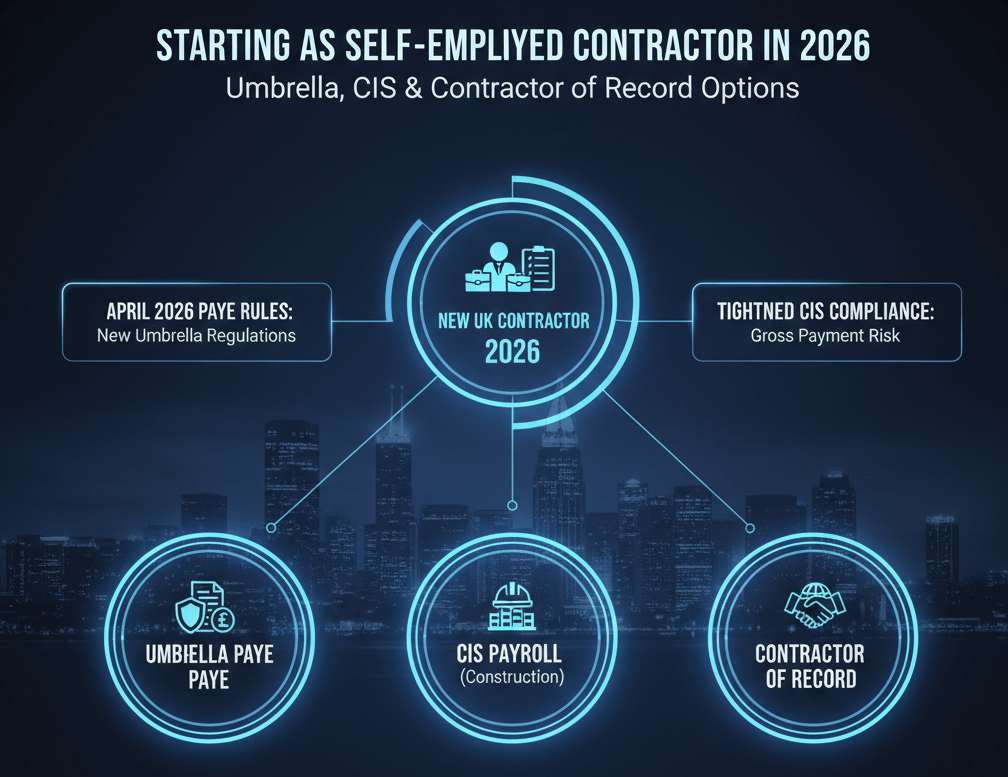
Did you know that from April 2026, new PAYE rules for labour supply chains involving umbrella companies come into force, alongside tightened CIS compliance measures that can immediately revoke gross payment status for non-compliance, making compliant payroll choices more critical than ever for new entrants? This regulatory tightening underscores the importance of selecting the right structure from day one.
Key Areas We Will Cover
- Essential first steps to becoming a self-employed contractor in the UK
- Understanding IR35 post-reforms and its impact on new contractors
- CIS options and maintaining gross payment status in construction
- Comparing umbrella, CIS, and Contractor of Record solutions
- How Futurelink Group provides compliant payroll and insurance support
Introduction
Starting as a self-employed contractor in 2026 offers flexibility and earning potential, particularly in high-demand sectors like construction and energy, but requires careful navigation of UK tax rules, including IR35 post-2024 offsets reform and upcoming April 2026 changes. Options such as Contractor of Record, CIS payroll, umbrella PAYE, and CIS payroll services, provide compliant pathways for new entrants, ensuring proper tax handling, benefits access, and risk reduction. This guide outlines entry steps, key considerations, and how Futurelink Group supports newcomers with reliable payroll, insurance, and compliance expertise.
Essential First Steps to Becoming a Self-Employed Contractor
Begin with foundational actions to establish yourself legally and compliantly.
- Register with HMRC: Complete self-assessment registration for a Unique Taxpayer Reference (UTR) if not already held, essential for tax filings and CIS verification.
- Assess Your Sector and Status: Determine if your work falls under CIS (construction) or general contracting, and evaluate IR35 risk using HMRC’s CEST tool.
- Choose Your Operating Model: Decide between limited company, sole trader, umbrella, or Contractor of Record based on contract types and client preferences.
- Secure Necessary Certifications and Insurance: Obtain relevant qualifications (e.g., CSCS card for construction) and basic insurances like public liability.
- Set Up Banking and Tools: Open a dedicated business account and use invoicing or expense tracking software.
These steps lay a solid foundation, minimising early compliance issues.
IR35 Considerations Post-Reforms for New Contractors
IR35 (off-payroll working rules) remains key, with the 2024 offsets reform reducing hirer liabilities significantly by deducting taxes already paid, making outside IR35 engagements safer and potentially increasing opportunities.
From April 2026, changes to small company thresholds shift IR35 determination responsibility back to contractors for more clients, while new umbrella chain rules increase scrutiny on labour supply.
- Inside vs Outside IR35: Inside requires PAYE treatment; outside allows limited company flexibility but demands genuine self-employment evidence.
- Practical Impact for Newcomers: Many clients prefer an umbrella for simplicity and risk reduction, especially post-reforms.
- Status Determination: Use contracts emphasising substitution rights, control levels, and financial risk to support outside status where possible.
New contractors benefit from starting with compliant options to avoid disputes.
CIS Options and Maintaining Gross Payment Status
In construction, the Construction Industry Scheme (CIS) governs payments, with deductions at 20% for verified subcontractors or 30% for unverified.
- Register for CIS: Apply via HMRC for a UTR and subcontractor status; verified registration enables 20% deductions.
- Gross Payment Status (GPS): Qualify by meeting turnover thresholds (typically £30,000+), compliance history, and business tests; GPS means no deductions, improving cash flow.
- 2026 Changes: Tighter fraud rules allow immediate GPS revocation for knowing involvement in evasion, with penalties up to 30% and five-year reapplication bans.
Maintaining GPS requires impeccable record-keeping and timely payments.
Comparing Umbrella, CIS, and Contractor of Record Options
Each model suits different needs for new contractors.
- Umbrella PAYE: Ideal for inside IR35 or straightforward engagements; provides employed status with SSP, SMP, pensions, and insurances. Handles PAYE, RTI, and compliance automatically.
- CIS Payroll: Suited to construction self-employed; supports 20% deductions with verified status or GPS for gross payments. Focuses on tax-efficient structures.
- Contractor of Record: Offers intermediary compliance for project-based or international work, managing contracts, payments, and deductions without full employment obligations.
An umbrella often suits beginners due to its simplicity.
How Futurelink Group Supports New Entrants
Futurelink Group delivers compliant solutions tailored for construction and energy newcomers.
- Umbrella PAYE and PEO: Full PAYE handling, statutory benefits, daily payrolls, same-day payments, and included insurances (public liability, personal accident, employers’ liability).
- CIS Solutions: Supports verified/GPS status, correct deductions, and monthly returns to protect cash flow and compliance.
- Expert Guidance: Assistance with UTR registration, IR35 assessments, and onboarding for quick starts.
- Additional Perks: Secure portals, WhatsApp support, and dedicated teams ensure new contractors focus on work rather than admin.
With over 27 years of experience, Futurelink minimises risks in regulated sectors.
Conclusion
Starting as a self-employed contractor in 2026 demands informed choices amid IR35 post-reform clarity, CIS compliance tightening, and April 2026 umbrella updates. Umbrella, CIS, and Contractor of Record options provide pathways to compliant, efficient operations, particularly in construction and energy. Selecting the right model, maintaining status, and partnering with experts like Futurelink Group ensures smooth entry, statutory protections, and long-term success.
Get Started Today
Ready to launch your self-employed contracting career with full compliance and support? Contact Futurelink Group for a free consultation on umbrella, CIS, or Contractor of Record solutions perfect for new entrants. Call us on +44 (0) 1923 277900 or email sales@futurelinkgroup.co.uk.
Frequently Asked Questions About Starting as a Self-Employed Contractor in 2026
New contractors often have questions about options and compliance. Below, we address key concerns based on current UK regulations and practical insights.
Umbrella PAYE offers simplicity with automatic compliance, benefits, and no IR35 worries, ideal for first contracts.
It reduces hiring risks by offsetting taxes paid, encouraging more outside IR35 opportunities, while making the umbrella a safe default.
Meet turnover, compliance, and business tests; ensure timely tax payments and avoid fraud involvement to prevent immediate revocation from April 2026.
Yes, comprehensive cover, including public liability, employers’ liability, and personal accident, comes standard in umbrella and PEO options.
Absolutely; Futurelink supports seamless transitions between umbrella, CIS, and other compliant structures.
We guide new contractors through UTR setup, CIS verification, and onboarding to get you working quickly and compliantly.

Craig Moss
Craig Moss is a seasoned professional in the employment and recruitment industries, based in Kings Langley, UK. With over 30 years of experience, including a successful tenure as a central London realtor handling properties up to £3 million, he now leads an exciting management role at Futurelink Group. Specialising in compliant payroll solutions for contract recruitment, Craig helps clients increase margins by up to 30% while navigating complex legislation. His people-focused approach, honed through decades in sales and people management, ensures both recruiters and workers benefit from tax-efficient, compliant solutions. Passionate about building strong relationships, Craig thrives on delivering results that drive business success.