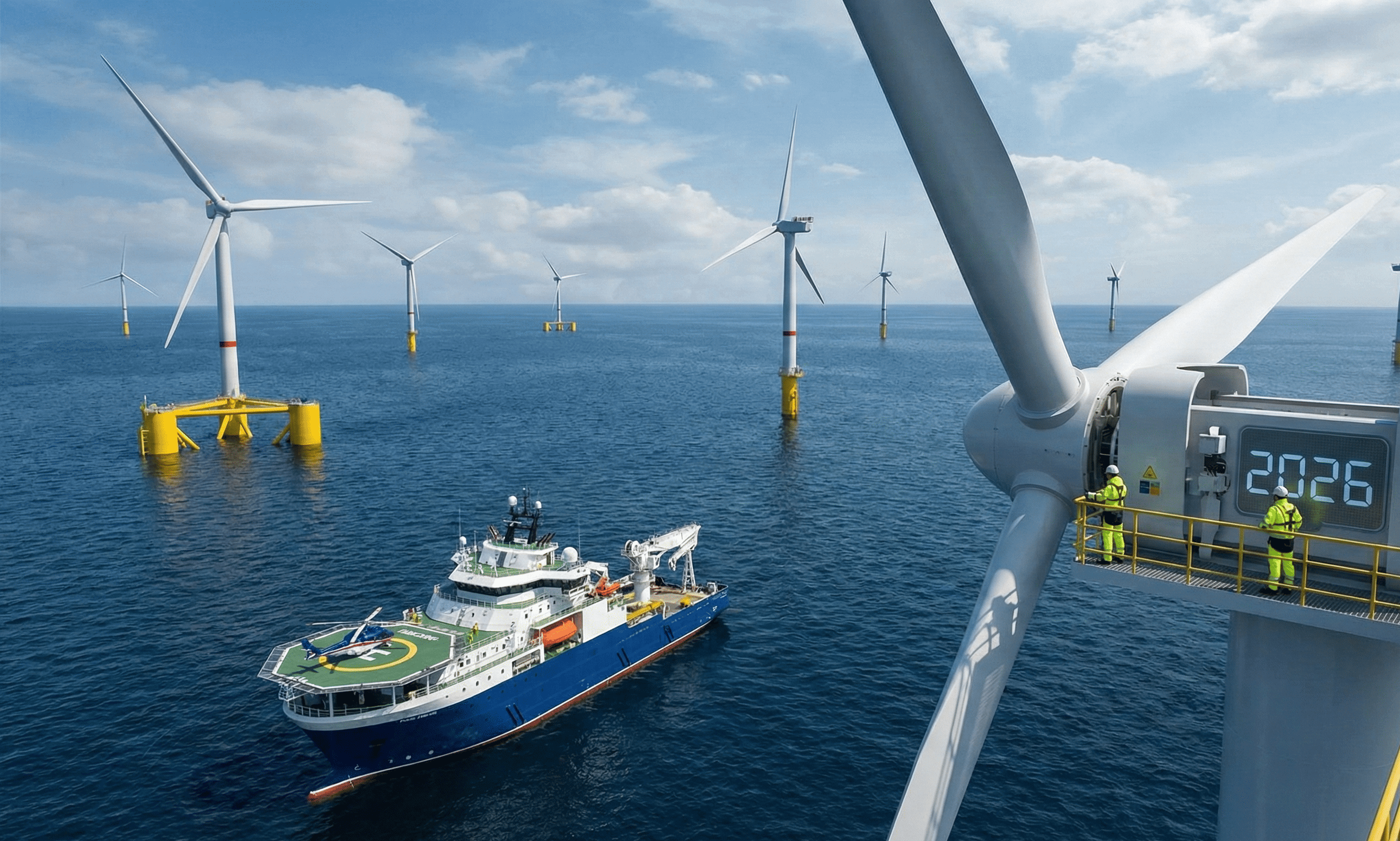
Did you know that the global wind sector is projected to require around 628,000 technicians by 2030, with significant growth in offshore roles driven by rapid capacity expansion and persistent skills shortages? In 2026, contractors worldwide can capitalise on this demand in offshore wind, accessing high-paying opportunities in installation, maintenance, and specialised technical work across emerging and established markets.
Key Areas We Will Cover
- The global offshore wind job market outlook for 2026 and key growth drivers
- In-demand contractor roles and transferable skills from other industries
- Essential global certifications and training standards
- Step-by-step process to enter offshore wind contracting internationally
- Finding contracts, typical rotations, and working with agencies worldwide
- Payroll and compliance considerations for international contractors
- How Futurelink Group supports contractors in the global renewables sector
Introduction
Offshore wind jobs in 2026 represent one of the fastest-growing opportunities for contractors globally, fuelled by ambitious renewable energy targets, massive investments in floating and fixed-bottom projects, and urgent skills shortages in key technical areas. From Europe and Asia-Pacific to emerging markets in the Americas and beyond, contractors can secure flexible, well-compensated roles in turbine installation, cable laying, maintenance, and engineering support. This guide outlines practical steps to break into the sector, including certifications, job hunting strategies, rotations, and compliant payroll options to help contractors worldwide thrive in this dynamic industry.
The Global Offshore Wind Job Market in 2026
The offshore wind industry continues its rapid expansion, with global capacity additions accelerating to meet net-zero commitments and rising energy demands.
- Forecasts indicate substantial technician demand growth, particularly in operations and maintenance as fleets mature.
- Key markets include Europe (leading in installed capacity), Asia-Pacific (fastest-growing with projects in China, Taiwan, Vietnam), and North America (ramping up with multi-gigawatt pipelines).
- Contractors benefit from project-based work, often with premium rates due to specialised skills and rotational schedules.
- Skills shortages persist in high-voltage engineering, blade repair, and safety-critical roles, creating strong entry points for prepared professionals.
In-Demand Roles for Contractors Worldwide
Offshore wind offers diverse contracting positions, many accessible with transferable experience from oil and gas, marine, renewables, or engineering sectors.
- Wind turbine technicians specialising in blades, electrical systems, and hydraulics.
- High-voltage engineers, cable installation and commissioning specialists.
- HSE advisors, offshore supervisors, and rope access technicians.
- Project support roles like marine coordinators and quality inspectors. Professionals with mechanical, electrical, or safety backgrounds often transition effectively, especially as projects shift toward floating wind technologies.
Essential Certifications and Training
Global standards ensure safety and competence, with the Global Wind Organisation (GWO) certifications recognised internationally across major markets.
- GWO Basic Safety Training (BST): Includes Working at Heights, First Aid, Manual Handling, Fire Awareness, and Sea Survival for offshore environments.
- GWO Basic Technical Training (BTT): Covers mechanical, electrical, and hydraulic fundamentals for turbine work.
- Additional requirements may include medical fitness checks (e.g., equivalent to OGUK standards) and trade-specific qualifications like IRATA for rope access. Enrol with GWO-accredited providers worldwide; these form the foundation for applications and are often employer-funded or reimbursed.
Step-by-Step: Breaking Into Offshore Wind Contracting Globally
- Identify transferable skills and target roles (e.g., electrical/mechanical from related industries).
- Complete GWO BST and relevant technical training, plus any country-specific medical or safety requirements.
- Update your CV to emphasise technical expertise, safety focus, and adaptability to rotational work.
- Register with international recruitment agencies specialising in renewables and offshore wind.
- Apply via global job boards, agency networks, developer postings, or LinkedIn for contract opportunities.
- Prepare for interviews highlighting a safety mindset, technical knowledge, and willingness to travel.
- Secure initial contracts, starting with shorter assignments to gain experience in diverse markets.
Finding Contracts and Understanding Rotations
Specialist agencies facilitate placements across regions, with many contractors mobilised quickly for project peaks.
- Rotations commonly follow 2 weeks on and 2 weeks off, with 12-hour shifts and vessel/helicopter transfers.
- Contracts range from construction/installation (intense, short-term) to operations and maintenance (longer-term).
- Build visibility through industry networks, events, and online platforms to access opportunities in Europe, Asia, and emerging regions.
Payroll and Compliance for International Offshore Wind Contractors
Global contractors need flexible, compliant structures to handle multi-country work and rotational lifestyles.
- Contractor of Record – a Gross Payment solution to help self-employed workers remain as tax-efficient as possible.
- Umbrella-style services simplify PAYE-equivalent compliance for shorter assignments, or where the end-client has determined employed status.
- PEO solutions provide co-employment benefits, insurance, and support for cross-border deductions.
- Ensure setups align with local tax rules, double taxation agreements, and project-specific requirements.
Conclusion
Breaking into offshore wind jobs as a contractor in 2026 is realistic amid global skills shortages and sector expansion, with strong demand for GWO-certified professionals in turbine maintenance, installation, and technical support. By obtaining essential certifications, leveraging transferable skills, and partnering with international agencies and compliant payroll providers, contractors can access rewarding opportunities worldwide. Preparation, safety focus, and reliable support are essential for a successful entry and long-term career in this vital renewable energy field.
Get Started Today
Ready to pursue offshore wind contracting opportunities in 2026? Contact Futurelink Group for compliant payroll solutions, including umbrella PAYE and PEO options suited to international renewables work. Call us on +44 (0) 1923 277900 or email sales@futurelinkgroup.co.uk, based at Kings House, Home Park Estate, Station Road, Kings Langley, WD4 8LZ.
Frequently Asked Questions About Offshore Wind Jobs for Contractors in 2026
These address common queries for those entering the global sector, based on current industry standards and trends.
GWO Basic Safety Training (BST) and often Basic Technical Training (BTT) are standard; additional medical fitness and trade-specific qualifications may apply by region.
Yes, support and trainee positions exist, particularly in growing markets; transferable skills from related fields accelerate entry.
Most follow 2 weeks on and 2 weeks off, with extended shifts and employer-provided travel; patterns vary by project and location.
Umbrella services offer compliance simplicity for short-term roles; PEO provides enhanced benefits and support for longer or multi-country assignments.
We provide accurate, compliant payroll with same-day payments, full insurances, and guidance tailored to the sector’s rotational and international demands.

Craig Moss
Craig Moss is a seasoned professional in the employment and recruitment industries, based in Kings Langley, UK. With over 30 years of experience, including a successful tenure as a central London realtor handling properties up to £3 million, he now leads an exciting management role at Futurelink Group. Specialising in compliant payroll solutions for contract recruitment, Craig helps clients increase margins by up to 30% while navigating complex legislation. His people-focused approach, honed through decades in sales and people management, ensures both recruiters and workers benefit from tax-efficient, compliant solutions. Passionate about building strong relationships, Craig thrives on delivering results that drive business success.